
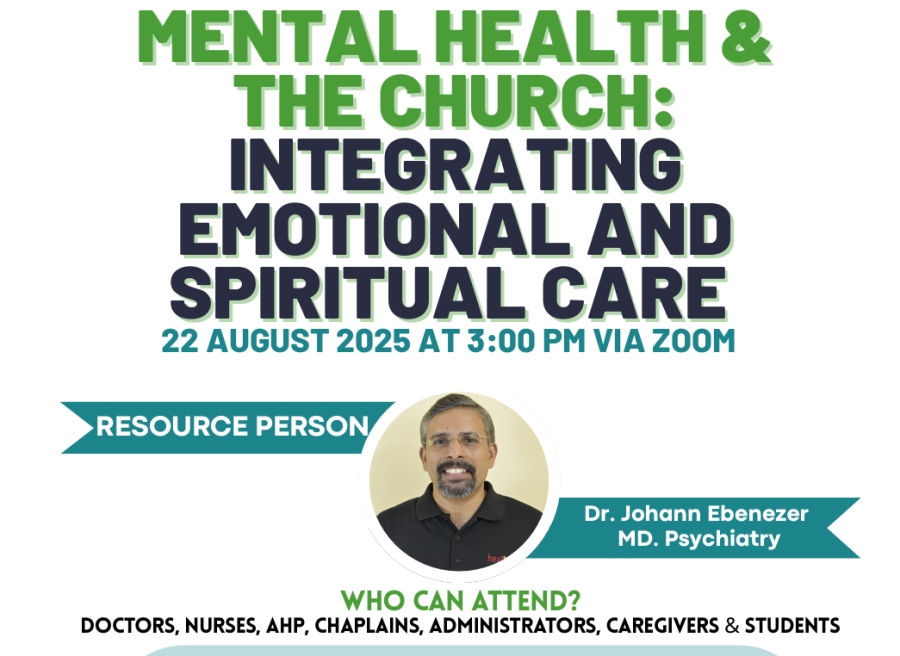

Mental health challenges have reached unprecedented levels globally, yet there exists a significant gap between clinical mental health services and spiritual care within faith communities. This webinar addressed the pressing need, recognising that mental health and spiritual wellbeing are intrinsically connected aspects of human experience that require integrated approaches. The importance of this topic stems from the historical reality that psychology and psychiatry originally emerged from philosophical and theological traditions. The Greek word "psyche," meaning soul, forms the root of both psychology and psychiatry, highlighting that these disciplines were once integrated with spiritual care rather than separated from it. Today's divide between mental health professionals and faith communities has created a vacuum in holistic care, particularly affecting Christian families and congregations. The webinar distinguished itself through an innovative approach using role-play scenarios to demonstrate real-world applications of integrated care. Dr Johann Ebenezer and his interdisciplinary team from healthSoch Academy portrayed a fictional but representative Christian family facing substance abuse challenges.
This dramatic presentation made abstract concepts tangible, allowing participants to witness family dynamics, communication patterns, and intervention strategies in action. The role-play effectively illustrated how theoretical principles translate into practical caregiving situations.
Webinar Synopsis
Dr Johann began by establishing the historical integration of theology, philosophy, and psychology in early Christian tradition. He explained how the separation of these disciplines over the past 150 years has created current tensions between faith communities and mental health professionals.
The central drama portrayed a pastor's family dealing with their son's substance abuse, revealing multiple layers of dysfunction:
- Parental role imbalance with the father retreating from disciplinary responsibilities
- Work-life boundary issues affecting family relationships
- Inconsistent messaging between parents regarding discipline and support
- Spiritual disconnection within a religious family structure
The webinar demonstrated how mental health professionals can work with Christian families while respecting both clinical best practices and biblical principles. Key elements included:
- Bringing family caregivers into the treatment process
- Addressing systemic family dynamics alongside individual symptoms
- Establishing consistent boundaries and expectations
- Integrating spiritual practices like family devotions into treatment plans
Key Takeaway Points
1. Reclaim Historical Integration
The church must recognize that soul care (mental health) was historically within its mandate and expertise. Modern separation is artificial and counterproductive.
2. Address Family Dynamics First
Many mental health issues in Christian contexts stem from compromised family structures. Addressing parental roles, consistency, and family spiritual practices is foundational.
3. Father's Critical Role
Research confirms biblical principles regarding fathers' crucial role in child development, particularly during adolescence. Absent or passive fathers correlate with increased substance abuse, mental illness, and behavioural problems.
4. Consistent Messaging Required
All caregivers must align on core principles and boundaries. Mixed messages undermine treatment effectiveness and family stability.
5. Integration, Not Separation
Mental health professionals and spiritual caregivers should work collaboratively rather than in isolation, each contributing their expertise while respecting the other's domain.
6. Practical Implementation
Churches can integrate mental health awareness through leader training, addressing relevant topics in existing ministries, and returning to substantive biblical teaching that addresses life's challenges.
7. Christian Worldview Foundation
When working with Christian families, interventions should align with biblical principles regarding family structure, discipline, forgiveness, and restoration while maintaining clinical effectiveness. The webinar demonstrated that mental health and spiritual care are not competing approaches but complementary aspects of holistic human flourishing. The innovative use of role-play made complex concepts accessible and provided a model for future training initiatives in this critical area of integrated care.